What's the Deal with Tree Removal Costs?
You've got a tree that needs to go, and the first thing you're probably wondering is, "How much is this going to set me back?" It's a fair question, and honestly, it's one of the most common ones I get here at All Star Tree Service. There's no one-size-fits-all answer, but I can tell you what factors we look at to give you a solid quote, and what you should expect to pay in New Caney, TX.
Forget those online calculators that give you a national average. They don't know a thing about our local conditions, like the clay soil we often deal with around areas like Tavola or the unpredictable storms that can leave trees leaning precariously. Those things matter a lot when we're talking about safety and complexity.
What Makes a Tree Removal More Expensive?
When I come out to give you an estimate, I'm not just guessing. I'm looking at a few key things that directly impact the time, equipment, and crew needed for the job. Here's the rundown:
Tree Size: This is the big one. A small tree, say under 20 feet tall, is a walk in the park. A massive oak or pine, 60 feet or taller, is a whole different beast. Taller trees mean more climbing, more rigging, and more controlled drops, which takes more time and skill.
Location and Accessibility: Is the tree in your front yard with easy access for our trucks and equipment? Or is it tucked away in the backyard, surrounded by your prized azaleas, a fence, or even worse, your house? If we can't get equipment close, it means more manual labor, more carrying, and more careful planning. This is especially true if we're working around power lines – that's a major safety concern and often requires coordination with the power company.
Tree Condition: A healthy, structurally sound tree is easier to remove than one that's dead, diseased, or partially fallen. Dead wood can be unpredictable and brittle, making it more dangerous to climb and cut. Storm-damaged trees, especially after a big hurricane or tropical storm, are often twisted and under immense pressure, which ramps up the risk factor significantly.
Type of Tree: Some trees are just tougher than others. Hardwoods like oak or pecan are dense and heavy, requiring more effort to cut and process than softer woods like pine or sweetgum.
Cleanup Included: Do you want us to just drop the tree and leave the mess? Or do you want us to haul away all the wood, chip the branches, and leave your yard spotless? Most folks want a full cleanup, and that's usually included in our quotes, but it's something to clarify.
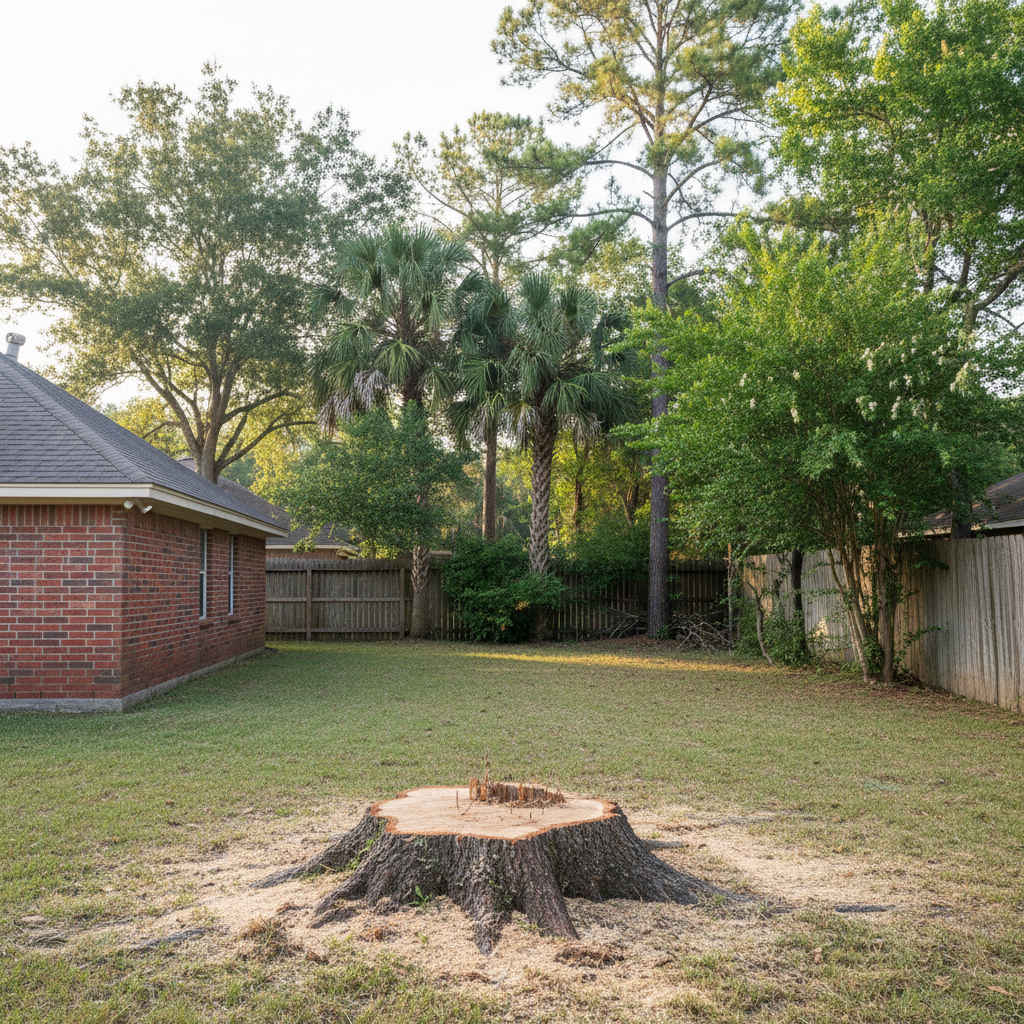
Stump Grinding: This is almost always an add-on. Removing the tree is one thing; getting rid of the stump is another. It requires specialized equipment and time. If you want the stump gone, make sure it's in the quote.
Typical Tree Removal Cost Ranges in New Caney
Alright, let's talk numbers. Keep in mind these are general ranges, and your specific situation could be on the lower or higher end.
Small Trees (under 20 feet): Think small ornamental trees or young saplings. You're probably looking at $150 - $400.
Medium Trees (20-40 feet): Many common backyard trees fall into this category. Expect to pay $400 - $800.
Large Trees (40-60 feet): This is where things start getting serious. These often require more specialized rigging and care. Prices typically range from $800 - $1,500.
Very Large Trees (over 60 feet): Big, mature trees, especially those near structures or power lines, are the most complex. You could be looking at $1,500 - $3,000+, sometimes even more for extremely hazardous removals.
Remember, these ranges usually include cutting down the tree, cutting it into manageable pieces, and basic cleanup. If you need stump grinding, that's usually an extra $100 - $400 depending on the stump's size and accessibility.
What Should Be in Your Quote?
When you get a quote from All Star Tree Service or any other reputable company, it should be clear and detailed. Here's what you should expect to see:
Scope of Work: Exactly what trees are being removed? What's being left (e.g., stump, wood)?
Cleanup Details: Will they haul away all debris? Chip branches? Rake the area?
Stump Grinding: If requested, it should be listed separately with its own cost.
Total Cost: The final price, no hidden fees.
Insurance Information: A professional company should be able to provide proof of liability insurance and workers' compensation. Don't ever hire someone without it – you could be liable if they get hurt on your property!
How to Avoid Overpaying (and Getting Scammed)
You don't want to pay too much, but you also don't want to hire a fly-by-night outfit that'll mess up your property or leave you hanging. Here's my advice:
Get Multiple Quotes: Always get at least three estimates from different, reputable companies. This helps you compare prices and get a feel for who you're comfortable with.
Check References and Reviews: Look at their online reviews (Google, Facebook, etc.) and ask for local references. A good company will have plenty of happy customers.
Verify Insurance: I can't stress this enough. Ask for proof of insurance. If they hesitate or say they don't have it, walk away. It's not worth the risk.
Beware of Super Lowball Offers: If one quote is drastically lower than all the others, be suspicious. They might be uninsured, inexperienced, or planning to cut corners. Quality tree work isn't cheap, and cheap tree work isn't quality.
Get Everything in Writing: Make sure the quote details everything we discussed above. No verbal agreements for big jobs.
Tree removal is a serious job that requires skill, proper equipment, and a focus on safety. Don't just pick the cheapest guy with a chainsaw. Do your homework, ask the right questions, and you'll find a reliable local pro who can get the job done right without breaking the bank.